What a Reverse Osmosis System Does
A reverse osmosis system uses a multi-stage filtration process to remove a broad range of dissolved solids and impurities from drinking water. The result is water that tastes noticeably cleaner than standard tap water, without the chlorine taste, mineral aftertaste, or other qualities that lead some people to reach for bottled water.
Many homeowners choose RO specifically for:
- Drinking water from the kitchen tap
- Coffee and tea, where water quality noticeably affects flavour
- Cooking, where pure water allows ingredient flavours to come through more clearly
- Ice makers and water dispensers connected to the kitchen line
RO systems are designed to improve the water you use most, without requiring filtration at every tap in the home.
How a Reverse Osmosis System Works
Understanding the process helps you know what you are getting and why RO goes further than standard carbon filtration.
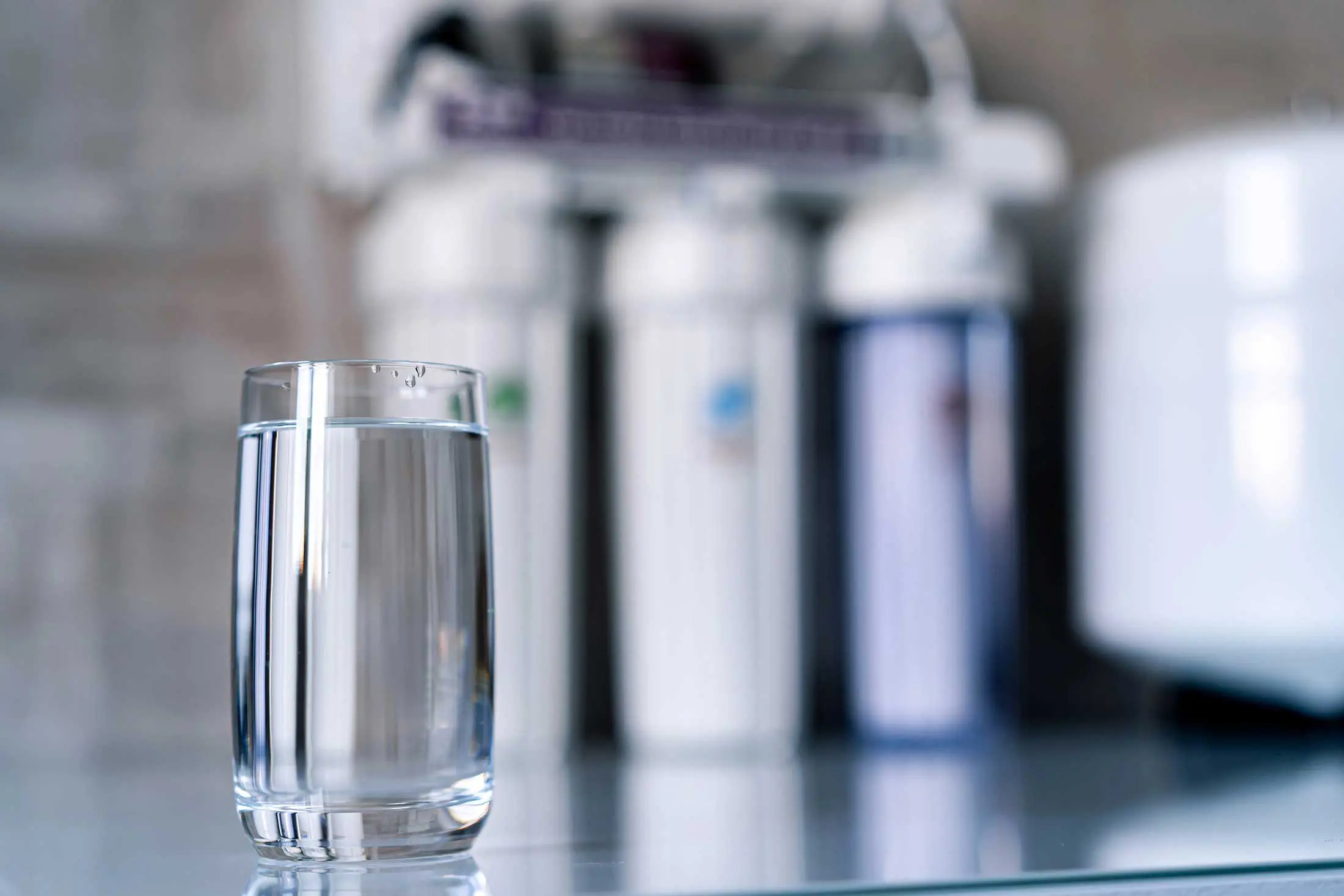
Water passes through several stages before it reaches your dedicated tap:
Pre-filtration
Water first passes through one or more pre-filters that remove sediment, rust, and chlorine. This stage protects the RO membrane and extends its life.
The RO membrane
Water is pushed under pressure through a semi-permeable membrane with extremely fine pores. This membrane blocks dissolved solids, certain heavy metals, nitrates, sodium, and many other contaminants, while allowing water molecules to pass through. This stage makes RO fundamentally different from standard filtration.
Post-filtration
After the membrane, water passes through a final carbon filter that removes any remaining taste or odour before it reaches your tap.
Storage tank
Purified water is stored in a small tank under the sink, so filtered water is available on demand rather than produced on the spot each time you turn the tap.
The membrane is the key component. It is what allows RO to remove substances that a standard carbon filter cannot, including dissolved salts, nitrates, certain heavy metals, and sodium from softened water.
What Reverse Osmosis Removes
This is where RO goes further than basic water filtration. While a carbon filter is effective at improving taste and reducing chlorine, a reverse osmosis membrane can reduce a much broader range of substances, including:
- Dissolved salts and total dissolved solids
- Nitrates and nitrites
- Sodium from water softener regeneration
- Certain heavy metals, including lead and copper
- Fluoride
- Chlorine and chloramines
- Many other dissolved compounds, depending on the system and membrane rating
For homeowners who want the cleanest possible drinking water from the tap, RO is generally the most thorough point-of-use option available.
Reverse Osmosis vs Basic Water Filtration
Both systems improve water quality, but they solve different problems and work in different ways.
A standard carbon filtration system is effective at reducing chlorine taste and odour, certain organic compounds, and sediment. It improves the taste and smell of water, which is enough for many households.
A reverse osmosis system goes further by filtering at the membrane level, removing dissolved solids and a broader range of compounds that a carbon filter cannot address. The trade-off is that RO systems do send some water to drain as part of the filtration process, and they require a dedicated tap and storage tank rather than filtering directly from the main line.
If your primary goal is better-tasting drinking water and you are bothered by the taste of chlorine, a carbon filter may be sufficient. If you want the cleanest possible water at the tap or if you have specific concerns about contaminants, RO is the more thorough option. We are happy to help you figure out which fits your situation.
A Note on Minerals and Remineralization
One thing worth knowing: the RO membrane removes beneficial minerals like calcium and magnesium alongside contaminants. For most people, this is not a health concern, since these minerals are readily available through food. However, some people notice a slight difference in the taste of RO water compared to mineral-rich tap water.
If mineral content matters to you, some RO systems include a remineralization stage that adds a small amount of healthy minerals back into the water after filtration. This can improve taste and bring the pH closer to neutral. It is worth asking about when choosing a system.
RO Systems and Water Softeners: A Good Combination
If your home already has a water softener, a reverse osmosis system pairs well with it for a practical reason. Water softeners use sodium to replace hardness minerals via ion exchange, so softened water contains a small amount of added sodium. For most people, this is not a concern, but for anyone on a low-sodium diet or who simply prefers sodium-free drinking water, an under-sink RO system removes that sodium at the kitchen tap.
The result is softened water throughout the home for plumbing and appliances, and sodium-free purified water at the tap for drinking and cooking, the benefits of both systems without compromise.
Where We Install Reverse Osmosis Systems
Most residential reverse osmosis systems are installed under the kitchen sink, with a dedicated drinking water tap added to the sink or countertop. Depending on your setup, the system can also be connected to a refrigerator water line or ice maker.
We review your plumbing layout and cabinet space before installation and confirm what is possible, so there are no surprises on the day.
What to Expect With Reverse Osmosis Installation
Reverse osmosis installation is usually completed in a single visit and takes a few hours from start to finish.
Our process typically includes:
- Talking through your goals and current water concerns
- Recommending a system sized for your household’s daily water use
- Installing the RO unit, storage tank, and dedicated tap
- Connecting the drain and supply lines properly
- Flushing the system to clear manufacturing residue before use
- Testing for leaks and confirming the system is working correctly
- Walking you through how the system operates and what maintenance looks like
We aim to leave you with a system you understand and feel confident using, not just one that works.
Maintenance and Filter Changes
Reverse osmosis systems require periodic maintenance to stay effective. The schedule varies by system and household water usage, but as a general guide:
- Pre-filters typically need replacement every six to twelve months
- The RO membrane usually lasts two to three years before replacement
- Post-filters follow a similar schedule to pre-filters
We explain the specific maintenance schedule for the system installed in your home and the signs to watch for as filters age. Most maintenance is straightforward and does not require a service call for every filter change.
Reverse Osmosis System Installation in Southwest Calgary
We install reverse osmosis water filtration systems across southwest Calgary, including Palliser, Oakridge, Braeside, Cedarbrae, Woodbine, and Woodlands. Many homeowners in these established communities choose RO systems to improve the taste of drinking water, reduce their reliance on bottled water, and have greater confidence in what comes out of the kitchen tap.
"*" indicates required fields


Why People Choose Harper's as Their Calgary Plumbers
We’re proud to provide our Calgary area neighbours with the best plumbing company and drain cleaning services they need. Our clients love working with us because we work to fully understand your needs.
For us, it is not simply a one time invoice or job, every interaction is the opportunity to build a strong relationship for years to come. Life has unexpected challenges and can throw unique plumbing and drain cleaning problems your way. We are here to help solve those for you.
Frequently Asked Questions About Reverse Osmosis Systems
Find quick answers to common reverse osmosis questions. If you don’t see what you’re looking for, our team is happy to help
Yes. Reverse osmosis is a widely used residential drinking water system and is safe for everyday use for most households. If you have specific health conditions or concerns, speaking with your healthcare provider is always a reasonable step, but for the vast majority of people, RO water is a normal, practical choice.
RO systems do send some water to drain as part of the filtration process; this is how the membrane flushes away contaminants. The ratio depends on the system, but modern residential units are more efficient than older designs. We can explain what to expect from the specific system we recommend for your home.
Yes, the RO membrane removes most dissolved minerals, including calcium and magnesium. For most people, this is not a health concern, since these minerals are readily obtained through food. If mineral content matters to you, some systems include a remineralization stage that adds minerals back after filtration. We are happy to discuss this option.
Pure RO water can have a slightly lower pH than tap water, since it lacks the minerals that naturally buffer acidity. For most people, this is not noticeable or harmful. A remineralization filter can bring the pH back toward neutral if this is a concern
A standard carbon filter improves taste and odour by reducing chlorine and certain organic compounds. A reverse osmosis system goes further by filtering at the membrane level, removing dissolved solids, sodium, nitrates, certain heavy metals, and other compounds that a carbon filter cannot address. RO is a more thorough option for drinking water purity.
In many cases, yes. Depending on your kitchen layout and existing plumbing, the RO system can be connected to supply filtered water to a refrigerator water line or ice maker. We confirm what is possible during the installation planning conversation.
Most systems require moderate under-sink space for the filter housing and storage tank. We review your cabinet layout before installation and confirm the system will fit. In some cases, a tankless RO option is a better fit for tighter spaces.
Yes. We install residential reverse osmosis systems in Calgary and help homeowners choose a system that fits their home, their plumbing, and their daily water use.
With proper maintenance, regular filter and membrane changes, the main components of a residential RO system typically last ten years or more. The filters and membrane are the consumable parts that need periodic replacement; the system itself is built to last.
When you’re in a pickle, we’re here to help.
We started giving pickles to customers for a simple reason, when you go over to someone’s house, you bring something with you.
That’s always felt right to us.
We’re working in people’s homes, not just on plumbing systems, and we never want that to feel cold or transactional. The pickles are a small, neighbourly way to say thanks for having us in, and to leave behind something a little more memorable than the usual magnet or business card.
It’s simple, but it reflects how we like to do things around here: personal, thoughtful, and with a bit of character.


What Our Clients Are Saying
We’re always so grateful to our customers who take the time to leave us reviews and who often refer us to family, friends and neighbours as well as continue to use us whenever their plumbing needs arise.