The questions we hear on almost every toilet installation job, written down in one place to make the decision easier.
In This Guide
| 1. Bowl Shape: Round vs. Elongated |
| 2. One-Piece vs. Two-Piece |
| 3. Flush Type: Standard vs. Dual Flush |
| 4. Skirted vs. Non-Skirted (Concealed Trapway) |
| 5. Toilet Height: Standard vs. Comfort Height |
| 6. Colour Options |
| 7. Toilet Seats: What Comes With the Toilet (and What Doesn’t) |
| 8. A Few Things to Know Before Installation Day |
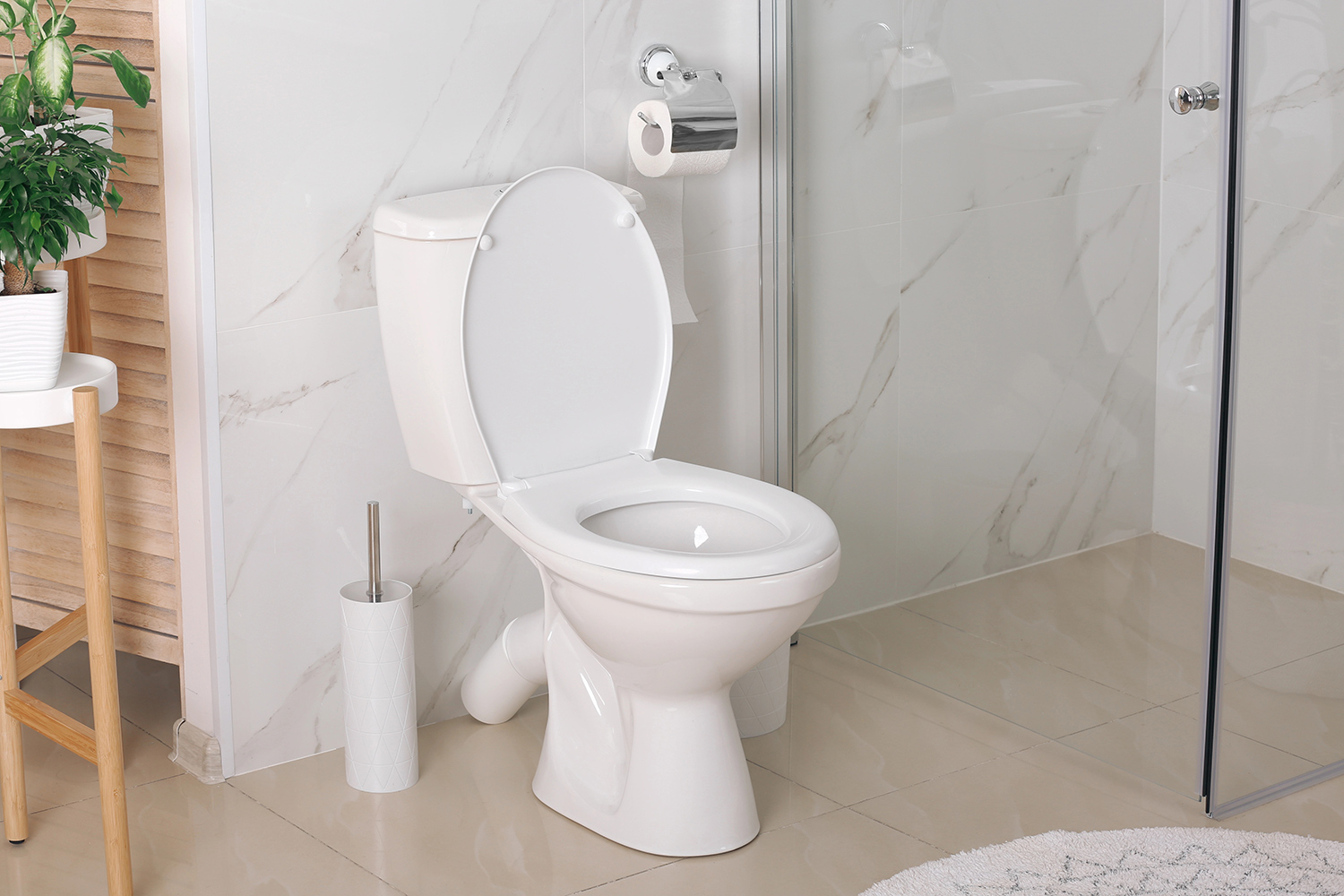
Choosing a toilet sounds simple until you’re standing in a showroom comparing a dozen models and realizing you don’t know the difference between a skirted toilet and a standard exposed-trapway model, or why bowl shape might actually matter for your bathroom.
We put this guide together because these come up on almost every toilet installation job. Whether you’re replacing an older toilet or planning a bathroom renovation, here are the main decisions worth sorting out before you buy.
| 💡 Before you compare features, confirm your current measurements
The rough-in is the distance from the centre of the toilet bolts on the floor to the finished wall behind the toilet (not the baseboard). Standard is 12 inches, but some older Calgary homes have 10-inch or 14-inch rough-ins. This measurement can eliminate certain toilets entirely, so it’s worth checking before you fall in love with a model at the showroom. If you have a banjo countertop over the tank, measure that clearance too. Not every toilet tank profile will fit underneath. |
1. Bowl Shape: Round vs. Elongated
This is one of the first things to consider, especially if you’re working with a smaller bathroom.
| Round Bowl | Elongated Bowl | |
|---|---|---|
| Front-to-back depth | ~16.5 inches | ~18.5 inches |
| Best for | Small bathrooms, powder rooms | Larger bathrooms, primary baths |
| Comfort | More compact | More comfortable for most adults |
Round bowls take up less space, about 2 inches shorter front-to-back. In a tight powder room, that can make a real difference. In a full bathroom with room to spare, most adults find an elongated bowl more comfortable for everyday use.
| 💡 Measure before you shop
If space is tight, confirm your bowl shape before purchasing. A round bowl is about 2 inches shorter front-to-back, which can matter in a powder room or small ensuite. And if you’re unsure whether your current round toilet fits well, stick with round. |
2. One-Piece vs. Two-Piece
This is one of the most common showroom comparisons, even if people don’t always know the names right away.
| One-Piece | Two-Piece | |
|---|---|---|
| Tank and bowl | Fused together | Separate, bolted together |
| Cleaning | Easier, fewer crevices | Seam between tank and bowl can collect grime |
| Shipping / handling | Heavier, ships as one unit | Easier to move, installs in two pieces |
| Cost | Generally higher | Generally lower |
| Look | Sleek, modern | Traditional, more common |
Two-piece toilets are still the most common and have the widest range of options at every price point. One-piece toilets have become more popular in renovations where a cleaner look matters. Both perform well when you buy a quality model.
3. Flush Type: Standard vs. Dual Flush
Most toilets in older Calgary homes have a standard single-flush design: one button or handle, one flush volume. Dual flush toilets offer two options: a lighter flush for liquid waste and a full flush for solid waste.
| Standard Flush | Dual Flush | |
|---|---|---|
| Flush volume (full) | ~6 litres per flush | ~6 litres (full) / ~3 litres (half) |
| Water savings | Baseline | Can reduce water use by 20–30% |
| Cost | Generally lower | Slightly higher upfront |
| Best for | Simplicity, reliability | Water-conscious households |
| Common issue | None | Lower flush volumes may not be ideal in homes with poor drainage |
For most homeowners, a quality standard flush toilet is the practical choice. If water conservation matters to you, a dual flush model is worth considering.
One thing worth knowing is that flush design is not only about water volume. Some toilets simply clear better than others. Brand quality, bowl geometry, and the way water is delivered through the bowl all play a role, so the model still matters even within the same flush type.
For example, some newer toilets use more advanced flush systems such as TORNADO FLUSH®, which uses two nozzles to create a strong swirling rinse around the bowl. The goal is a cleaner bowl, better waste removal, and more consistent performance with less buildup left behind. It can also make the toilet easier to clean over time because there are fewer areas for residue to collect.
If flush performance is high on your list, it is worth looking beyond just “standard” or “dual” and paying attention to the actual flush system the toilet uses.
4. Skirted Toilet vs. Non-Skirted
This one is mostly about aesthetics and ease of cleaning, but it’s a bigger decision than it looks.
Non-Skirted (Standard Exposed Trapway)
Traditional toilets have a visible S-curve on the outside of the base. That’s the trapway. It’s fully functional but has ridges and curves that can collect dust, hair and grime over time.
Skirted (Concealed Trapway)
Skirted toilets have a smooth, flat base that conceals the trapway entirely. They look cleaner, are much easier to wipe down, and have a more modern appearance. Installation can be a little more involved, but that is not usually a concern with a quality toilet.
| 💡 Plumber’s note
Skirted toilets have become much more common and we install them regularly without issue. If you’re renovating a bathroom and want a cleaner look, a quality skirted toilet is a solid choice. We’d be cautious with very low-end models. |
5. Toilet Height: Standard vs. Comfort Height
Toilet height is measured from the floor to the top of the bowl rim, not including the seat.
| Standard Height | Comfort Height | Tall | |
|---|---|---|---|
| Rim height | 14 to 15 inches | 16 to 16.5 inches | 19” floor to rim |
| Best for | Average adults, children | Taller adults, seniors, limited mobility | Make standing and sitting easier for tall people |
| Also called | Regular height | Chair height, ADA-style height | |
| Code compliance | Standard | Meets ADA guidelines when fully spec’d | ADA compliant |
Comfort height toilets have become the default in many new builds and renovations and a requirement in many commercial spaces. They sit about the same height as a standard chair, which most adults find easier to get on and off. You’ll also hear them called chair height or comfort height. Some models may also meet ADA requirements when installed to the proper specifications.
Standard height is still a good fit in homes with kids, or where the occupants simply prefer it. It’s not an inferior product, just a different fit.
It’s worth thinking about which bathroom this is going into and who uses it most. A kids’ bathroom, a primary ensuite, a powder room for guests, and a basement bath for aging in place all have different needs. Height is one of the easier decisions to get right when you think about it that way.
6. Colour Options
While the plumbing world has slowly moved away from the harvest gold and avocado green of decades past, there’s still more variety than most people expect.
- White is by far the most common choice, the easiest to source if needed quickly and the easiest to match over time.
- Biscuit, bone, or linen are warm off-white tones popular in older or traditionally styled bathrooms.
- Almond is a slightly yellower warm tone, common in mid-century homes.
- Black toilets have become a design statement in modern bathrooms. They look striking but show water spots and limescale more readily.
| 💡 Replacement tip
If you’re replacing just the toilet and keeping the existing tub and vanity, try to match the colour family rather than the exact shade. A slight mismatch is usually less noticeable than a completely different tone. |
7. Toilet Seats: Included, Optional, and Worth Upgrading
This surprises a lot of people: many toilets are sold as bowl-only or as a bowl-and-tank set, without a seat included. It’s especially common with higher-end or designer models.
When buying a toilet, confirm whether a seat is included. If it isn’t, you’ll need to buy one separately. Make sure it matches the bowl shape (round or elongated) and the colour.
Standard (“Slammer”) Seat vs. Slow-Close Seat
If you’ve spent time in a home with a slow-close seat, you already know the difference. The hinge mechanism slows the lid and seat on the way down. No more slamming at midnight.
| Standard Seat | Slow-Close Seat | |
|---|---|---|
| How it closes | Drops freely | Glides down slowly with damped hinge |
| Noise | Can slam | Nearly silent |
| Durability | Good | Very good. Less wear on the hinge over time. |
| Cost difference | Lower | Modest upcharge, usually worth it |
| Installation | Same process | Same process |
We recommend slow-close seats across the board. They last longer, they’re quieter, and they’re easier on the porcelain over years of use. It’s a small upgrade that most people appreciate pretty quickly.
Quick-Release Seats
Many seats now feature a quick-release mechanism that lets you detach the seat from the hinges entirely for deep cleaning. Especially useful in family homes. Worth looking for when you’re comparing models.
8. A Few Things to Know Before Installation Day
Before we remove the old toilet, we’ll check a few things that affect which models will work in your space:
- Floor condition: We’ll let you know if the subfloor or wax ring area needs attention. Better to catch it now than after the new toilet is in.
- Shut-off valve condition: Older toilet shut-off valves can be stiff, corroded, or stop working properly. If needed, we may recommend replacing the valve while we are on site. We would only turn off the home’s main water shut-off if the toilet shut-off valve cannot isolate the fixture. While we are there, we can also tag the main shut-off valve and let you know if it looks like it may need attention.
- Water supply line: Most installs include a new braided stainless supply line. If yours is old plastic or shows corrosion, we’ll replace it as part of the job.
- Flange condition: If the toilet flange is damaged, too low, or not secured properly, it may need to be repaired or adjusted before the new toilet goes in.
Not sure what’s right for your bathroom?
We’re happy to point you in the right direction before you buy. We can also connect you with one of our supplier fixture showrooms, where you can compare options and get help choosing a toilet that fits your space and your household.
We work with a number of trusted suppliers and can source quality toilets if you’d prefer to have us handle the whole thing. Either way, we’re looking for the same outcome: a toilet that fits your space, suits the people using it.
Call or text us Monday-Friday 8am-4pm to discuss your toilet replacement / install at (587) 216-1755 or book online anytime. If you want help choosing the right toilet before installation day, we’re happy to help.