What Water Filtration Actually Does
Filtration works by passing water through one or more filter media that trap or reduce specific substances before the water reaches the tap. Depending on the system, this can include chlorine and its byproducts, sediment, organic compounds that affect taste and odour, and other impurities.
It is worth understanding that filtration and water softening are different things. A water softener targets hardness minerals — calcium and magnesium — through a process called ion exchange. A filtration system focuses on taste, odour, sediment, and certain contaminants. Many homes benefit from one or both, depending on their specific water quality goals. If you are unsure which fits your situation, that is a good place to start the conversation.
Why Homeowners Choose Water Filtration
Calgary has clean, treated municipal water, but that does not always mean it tastes the way you want it to.
Many homeowners look for filtration to:
- Improve drinking water taste and reduce chlorine flavour at the tap
- Reduce unpleasant odours from tap water
- Feel better about water used for cooking, coffee, and ice
- Reduce sediment or particulate matter in older homes with aging pipes
- Support healthier-feeling water for daily use without relying on bottled water
For some households, the goal is purely taste and convenience. For others, there is a broader interest in understanding and improving what comes out of their taps. Either is a reasonable starting point.
Home Water Filtration System Options
There are several types of water filtration systems for home use. The right choice depends on what you are trying to improve and where in the home you want filtered water.
Carbon filtration
Activated carbon filters are among the most common filtration methods for residential use. They work by adsorption; contaminants stick to the carbon surface as water passes through. Carbon filters are particularly effective at reducing chlorine, chloramines, and taste- and odour-causing compounds in everyday drinking water. They do not remove hard minerals or bacteria.
Point-of-use drinking water systems
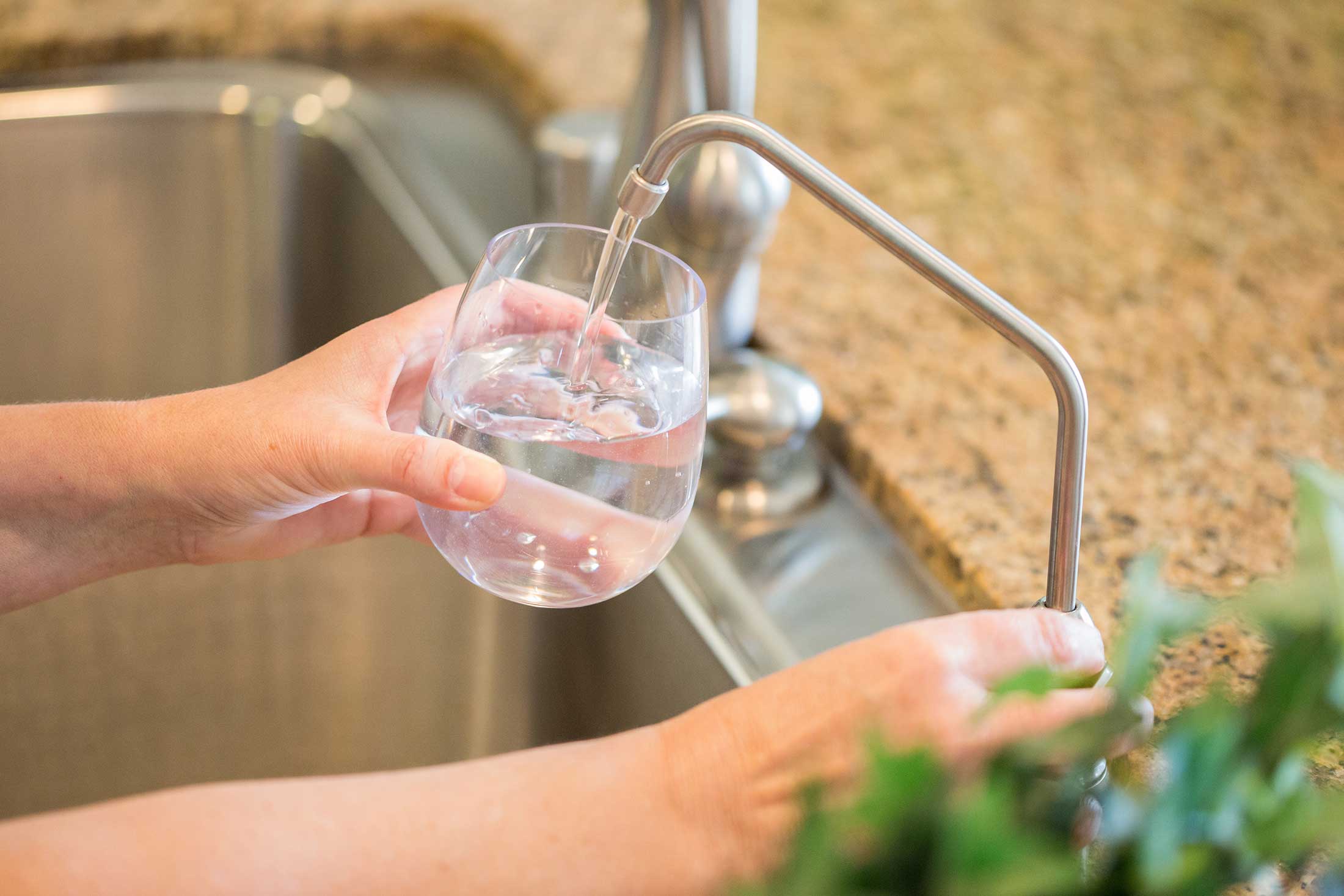
These systems focus on water at a single location, most often the kitchen sink, where most drinking and cooking water is drawn. They are compact, installed under the sink or at the tap, and are a practical starting point for homeowners who primarily want better-tasting drinking and cooking water.
Whole home water filtration systems
These systems filter water as it enters the home through the main supply line, so filtered water reaches every tap, shower, and appliance. They are a good fit when the goal goes beyond the kitchen. For example, reducing chlorine exposure in showers or protecting plumbing and appliances from sediment. Many whole-home systems use carbon filtration or a combination of filter stages.
Reverse osmosis systems
Reverse osmosis takes filtration further by pushing water through a semi-permeable membrane that removes a much broader range of dissolved substances, including sodium, certain heavy metals, nitrates, and many other compounds. It delivers some of the highest quality drinking water available from a tap and is covered in more detail on our Reverse Osmosis page.
UV light water treatment
Ultraviolet light systems are used to neutralize bacteria, viruses, and other microorganisms. UV treatment is distinct from filtration — it does not remove particles or chemicals, but it is highly effective at disinfecting the water without adding anything to it. This is covered in more detail on our UV Light Water Treatment page.
Some homeowners choose a single system. Others combine approaches depending on their goals. For example, a whole-home carbon filter paired with a reverse osmosis system at the kitchen sink.
Water Filtration vs Water Softening
This is one of the most common questions we hear, and it is worth clarifying.
A water softener addresses hardness. Which calcium and magnesium minerals cause scale buildup on fixtures, reduce appliance efficiency, and affect how soap lathers? It operates via ion exchange and requires salt for regeneration.
A water filtration system addresses taste, odour, sediment, and certain contaminants. It does not reduce water hardness.
Many Calgary homes benefit from both. A water softener protects plumbing and appliances from scale. A filtration system improves what the water tastes like at the tap. They serve different purposes and can work alongside each other without conflict. We are happy to help you figure out which one or which combination makes sense for your home.
How We Help You Choose the Right System
Choosing a filtration system should be based on real goals, not guesswork or a sales pitch.
We typically start by asking:
- What do you want to improve about your water?
- Is the issue taste, odour, sediment, or something else?
- Do you want filtration at one tap or throughout the home?
- Do you already have a water softener, or are you considering one?
- How much water does your household use day to day?
From there, we recommend a system that fits the home and explain clearly what it will and will not do, so your expectations are accurate before anything is installed.
What to Expect With Water Filtration Installation
Most home water filtration installations are straightforward and completed in a single visit.
Homeowners can expect:
- A conversation about your current water concerns and goals
- A recommendation based on your situation rather than a one-size approach
- Installation of the system with proper connections and testing
- A walkthrough of how the system works and what maintenance looks like
- Clear guidance on filter replacement schedules and what to watch for
We aim to make it feel clear and manageable, not technical or overwhelming. Once the system is in place, we want you to understand how to keep it running well.
"*" indicates required fields

Why People Choose Harper's as Their Calgary Plumbers
We’re proud to provide our Calgary area neighbours with the best plumbing company and drain cleaning services they need. Our clients love working with us because we work to fully understand your needs.
For us, it is not simply a one time invoice or job, every interaction is the opportunity to build a strong relationship for years to come. Life has unexpected challenges and can throw unique plumbing and drain cleaning problems your way. We are here to help solve those for you.
Frequently Asked Questions about Water Filtration Systems in Calgary
Find quick answers to common water filtration system questions. If you don’t see what you’re looking for, our team is happy to help
The best system depends on what you are trying to solve. For most Calgary homeowners who want better-tasting drinking water, a carbon-based under-sink or point-of-use system is a practical and effective starting point. For broader water quality goals, removing a wider range of dissolved substances, a reverse osmosis system is worth considering. We help you choose based on your specific goals rather than recommending the same system to everyone.
Calgary’s municipal water meets safe drinking standards, so filtration is not a health necessity for most households. That said, many homeowners find that filtering out chlorine taste and odour makes a noticeable difference in how their water tastes for drinking, cooking, and making coffee or tea. Whether filtration is worth it depends on what matters to you.
Activated carbon filters are particularly effective at reducing chlorine, chloramines, and the taste and odour compounds that affect drinking water. They also reduce certain organic compounds. They do not remove hardness minerals, bacteria, or dissolved solids like nitrates or heavy metals. For those concerns, reverse osmosis or UV treatment would be more appropriate.
A point-of-use system treats water at a single location, usually the kitchen sink, and is focused on drinking and cooking water. A whole-home system treats all water entering the house at the main supply line, which means filtered water reaches every tap, shower, and appliance. The right choice depends on how broadly you want the filtration to apply and on your specific concerns.
Carbon-based filtration systems are specifically designed to reduce chlorine taste and odour, which is one of the most common reasons Calgary homeowners install a filtration system.
Yes. We install point-of-use drinking water filtration systems, whole-home filtration solutions, and reverse osmosis systems for Calgary homeowners.
It depends on the system and household water use. Carbon filters in under-sink systems typically need to be replaced every six to twelve months. Whole-home systems vary. We explain the expected filter life and how replacements work when we install the system, so you know what to expect over the long term.
Yes, and it is quite common. A water softener handles hardness, while a filtration system addresses taste, odour, and other concerns. The two systems serve different purposes and work well alongside each other. Some Novo water softener models also include whole-home carbon filtration in a combined unit, which is worth considering if you are considering both options.
Standard filtration, particularly carbon filtration, is effective at improving taste, odour, and reducing chlorine and certain organic compounds. Reverse osmosis goes further, pushing water through a membrane that removes a much broader range of dissolved substances, including sodium, nitrates, certain heavy metals, and many other compounds. RO systems are typically installed at the kitchen sink and produce some of the purest drinking water available from a tap. More details are available on our Reverse Osmosis page.
UV treatment and filtration are different. UV systems use ultraviolet light to neutralize bacteria, viruses, and other microorganisms without adding chemicals to the water. They do not remove particles, chlorine, or dissolved substances, which is what filtration addresses. The two can be combined when both disinfection and taste improvement are goals. More details are on our UV Light Water Treatment page.
When you’re in a pickle, we’re here to help.
We started giving pickles to customers for a simple reason, when you go over to someone’s house, you bring something with you.
That’s always felt right to us.
We’re working in people’s homes, not just on plumbing systems, and we never want that to feel cold or transactional. The pickles are a small, neighbourly way to say thanks for having us in, and to leave behind something a little more memorable than the usual magnet or business card.
It’s simple, but it reflects how we like to do things around here: personal, thoughtful, and with a bit of character.

What Our Clients Are Saying
We’re always so grateful to our customers who take the time to leave us reviews and who often refer us to family, friends and neighbours as well as continue to use us whenever their plumbing needs arise.