Calgary winters have a way of testing every part of a home, especially the plumbing. Temperatures can swing fast, cold air finds its way into basements and crawl spaces, and before long, water lines are at risk of freezing. Frozen pipes are one of the most common winter emergencies in the city, but with the right preparation, homeowners can prevent damage and avoid costly repairs.
This guide explains practical steps to keep plumbing safe through the cold season and how to stay ready when temperatures drop.
Why Calgary Homes Face a Higher Risk of Frozen Pipes
The combination of freezing nights, dry air, and strong winds in Calgary makes pipes vulnerable. Homes built with exposed plumbing or older insulation often lose heat quickly. Basements, garages, and crawl spaces stay cold even when the furnace runs all day. Outdoor faucets and water lines along exterior walls can freeze overnight when temperatures fall below zero.
The Consequences of Frozen or Burst Pipes
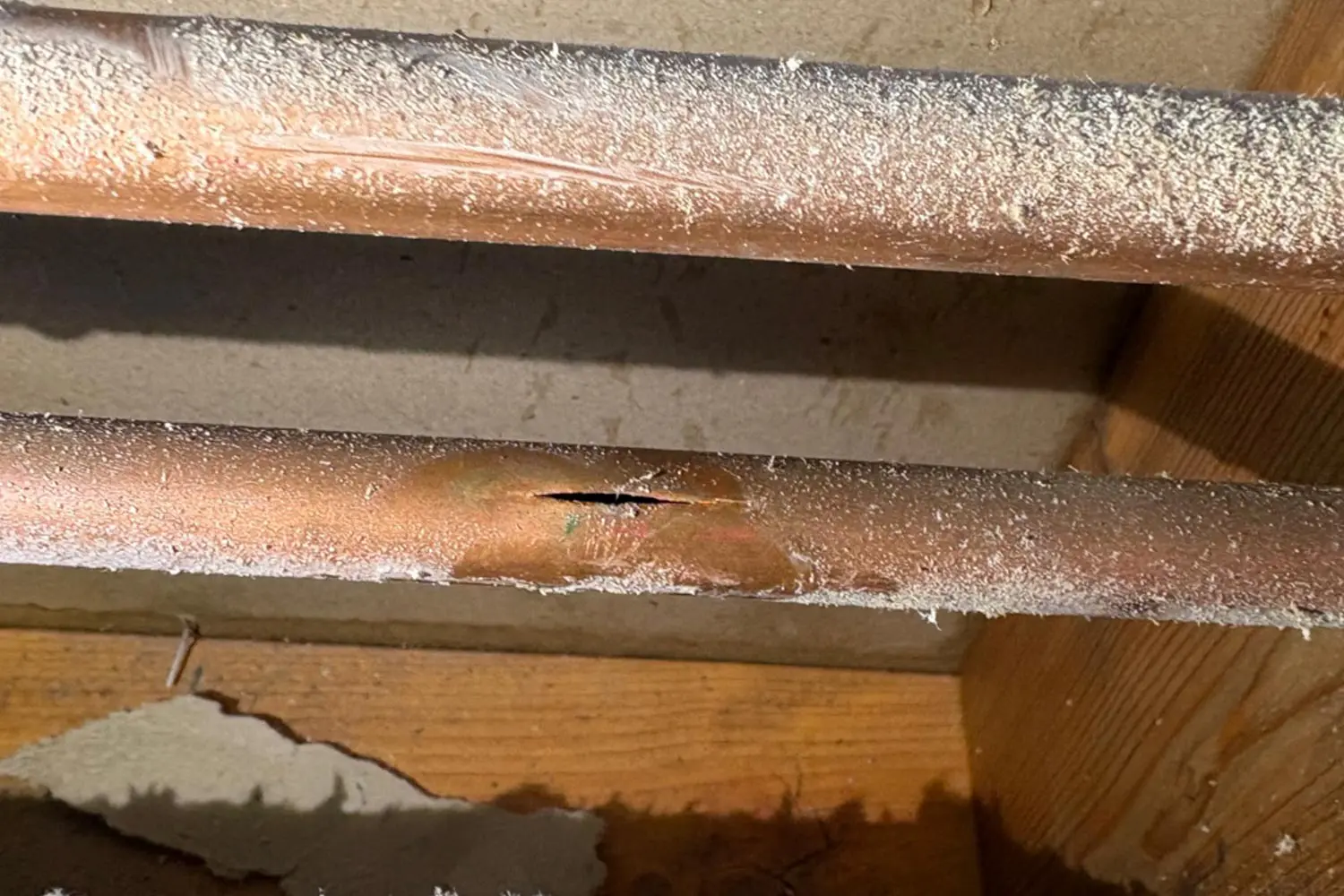
When water freezes, it expands inside the pipe. That expansion builds pressure until the pipe cracks. Once temperatures rise again, the ice melts and water starts pouring out. Even a small split can send hundreds of litres of water into walls, floors, or ceilings.
Repairing the pipe itself may be simple, but the damage from the water can be extensive. Flooring, drywall, and electrical systems can all be affected. Insurance may cover part of the loss, yet the disruption and cleanup can take weeks. The best strategy is to prevent the freeze before it starts.
Last year, our team visited a home in the Woodbine neighbourhood of Southwest Calgary where the heat had been turned off during a cold snap. Every toilet and multiple water lines froze and burst. The damage spread through several rooms, and the cleanup was extensive. It’s a clear example of how quickly things can go wrong when a home loses heat in winter.
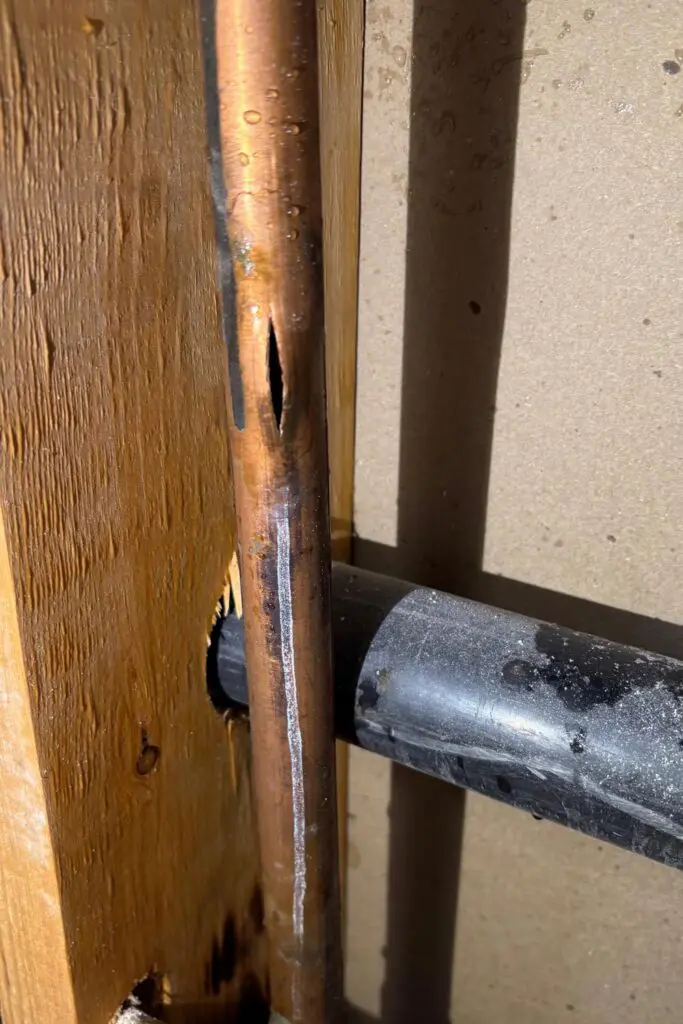
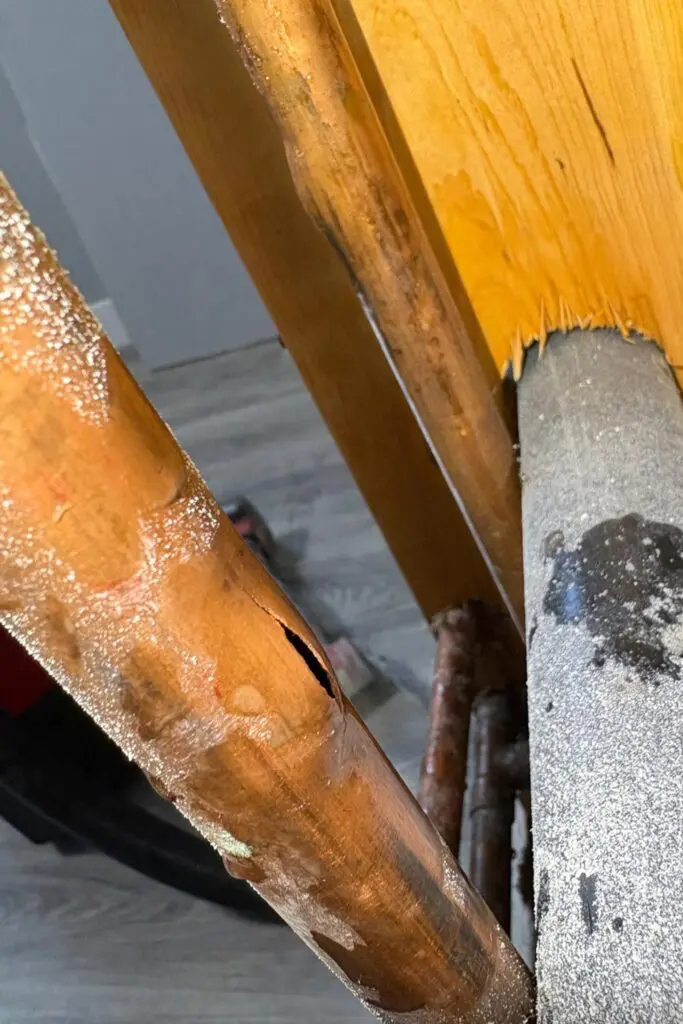
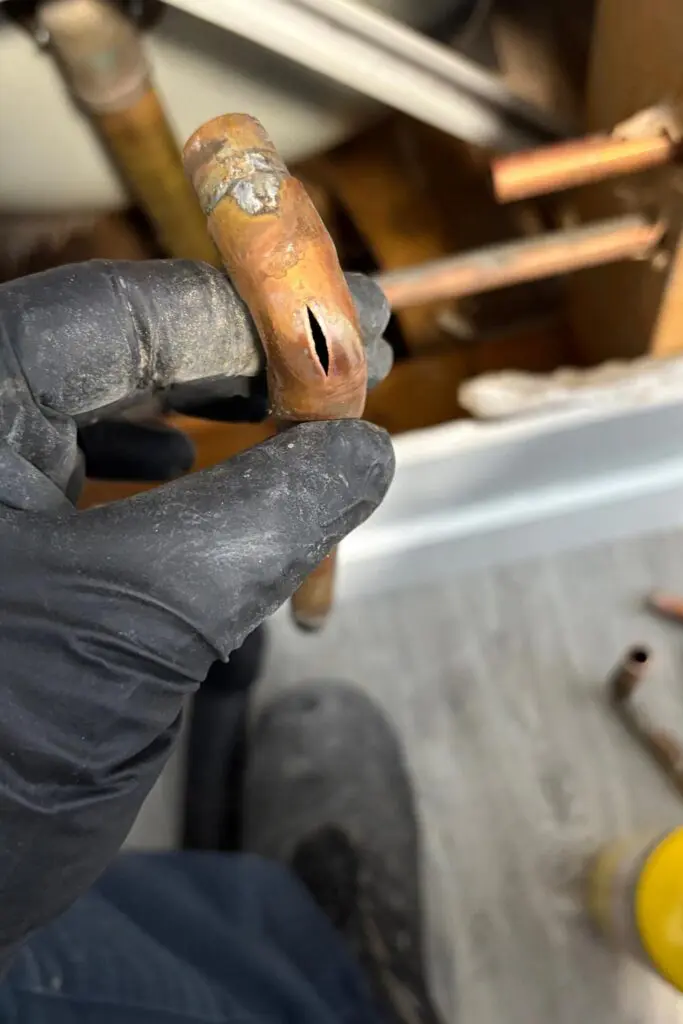
Damaged copper pipe from a Calgary home where frozen lines burst after the heat was turned off.
Step 1 – Insulate Vulnerable Pipes
Insulation is the most effective defense against freezing. Focus on areas where heat loss is greatest: basements, garages, crawl spaces, attics, and any exterior walls with plumbing inside. Foam sleeves, pipe wrap, or heat tape can help maintain a safe temperature around the pipe.
The material should fit snugly without gaps, especially at joints and elbows where cold air often settles. For larger systems or older homes, a professional inspection can identify pipes that need extra protection.
Step 2 – Seal Air Leaks
Even small openings let in enough cold air to freeze a nearby pipe. Check around window frames, vents, cable entry points, and basement sill plates. Expanding foam or weatherstripping can close these gaps.
A sealed home keeps more warmth inside, which protects both comfort and plumbing. This step also helps reduce heating costs, so it pays off beyond winter maintenance.
Step 3 – Keep Water Flowing
When the temperature drops below freezing, moving water resists turning to ice. You can let a light trickle run from a tap during extreme cold. Keep the flow low, check that the drain isn’t blocked, and make sure the plumbing can handle water running for long periods.
For kitchen and bathroom sinks located on exterior walls, open the cabinet doors to let warm air circulate around the pipes. This simple habit keeps those areas from dropping below freezing temperatures overnight.
Step 4 – Disconnect Hoses and Shut Off Outdoor Faucets
Leaving hoses connected through winter traps water inside both the hose and the faucet line. When that water freezes, pressure builds and can travel back into the indoor plumbing. Disconnect all hoses before the first major freeze and drain them fully.
If the home has a shutoff valve for outdoor spigots, close it and open the exterior faucet to release any remaining water. For added protection, install an insulated faucet cover.
Step 5 – Maintain Key Plumbing Equipment
Plumbing relies on more than just the lines running through the home. Water heaters, in particular, need a quick check before winter. Cold conditions can affect how they operate, especially if they sit in cooler areas of the house.
Look for signs of rust, leaks, or reduced performance, and make sure the temperature setting is appropriate for winter. A quick inspection helps keep hot water dependable when the cold hits.
Step 6 – Recognize the Signs of a Frozen Pipe
Catching a frozen pipe early can prevent a burst. Watch for reduced water flow, strange gurgling sounds, or visible frost on exposed lines. If a pipe feels unusually cold and no water comes out of the tap, it may already be frozen.
The first step is to shut off the main water valve. Then gently warm the frozen section with a hair dryer on low heat, heating pad, or towels soaked in warm water. Never use open flames, as they can damage the pipe or start a fire.
If the pipe remains frozen after several minutes or the location is hard to reach, it is best to contact a licensed plumber immediately.
Step 7 – What to Do If a Pipe Bursts
If a pipe bursts, time is critical. Turn off the main water supply right away. Open nearby taps to relieve any remaining pressure and allow water to drain. Move valuables out of the affected area and unplug electrical devices if it is safe to do so.
Start by calling an emergency plumber. When they’re enroute, take photos for insurance so everything is documented before repairs begin. Professionals can isolate the damaged section, repair the pipe, and begin drying out the area before further damage occurs. Quick action limits both the cost and stress of the situation.
Step 8 – Winter Plumbing Checklist
Having a checklist helps keep the process simple:
- Insulate exposed pipes in basements, crawl spaces, and garages.
- Seal air leaks near windows, vents, and wall openings.
- Keep a light trickle of water running during extreme cold.
- Disconnect garden hoses and shut off outdoor faucets.
- Test the sump pump and inspect the water heater.
- Know where the main water shutoff valve is located.
- Keep emergency plumber contact information accessible.
Completing this list before the first freeze can mean the difference between a smooth winter and a flooded basement.
When to Call for Professional Help
Some plumbing issues go beyond simple maintenance. Persistent low water pressure, frost on pipes inside the home, or recurring freezing in the same spot often signal deeper problems. Professional plumbers can identify where insulation is missing, replace outdated lines, and test shutoff valves for reliability.
Booking a pre-winter plumbing inspection ensures the system is fully prepared before the deep freeze. It’s the most reliable way to prevent emergencies during the coldest weeks of the year.
Reliable Winter Plumbing Support in Calgary
Calgary winters bring challenges that every local understands. The cold settles in early, the snow piles up, and everyone looks out for one another. In neighbourhoods across the city, small acts of preparation keep homes safe and warm. Checking pipes, sealing drafts, and staying ready for cold snaps are part of life here.
Harper’s Plumbing is part of that rhythm. As a family-run Calgary company, our team approaches every home with care and familiarity. Whether it’s answering a late-night call or helping a homeowner prepare before the first freeze, the work always comes with a sense of pride and responsibility to the community.
Cold weather may be harsh, but it brings out the best in local spirit. With thoughtful preparation and trusted hands nearby, every home can face winter with comfort and confidence.
If you’re getting ready for winter and want your plumbing in reliable shape, reach out to Harper’s Plumbing. A quick visit before the freeze can save a season of stress and keep your home running the way it should.