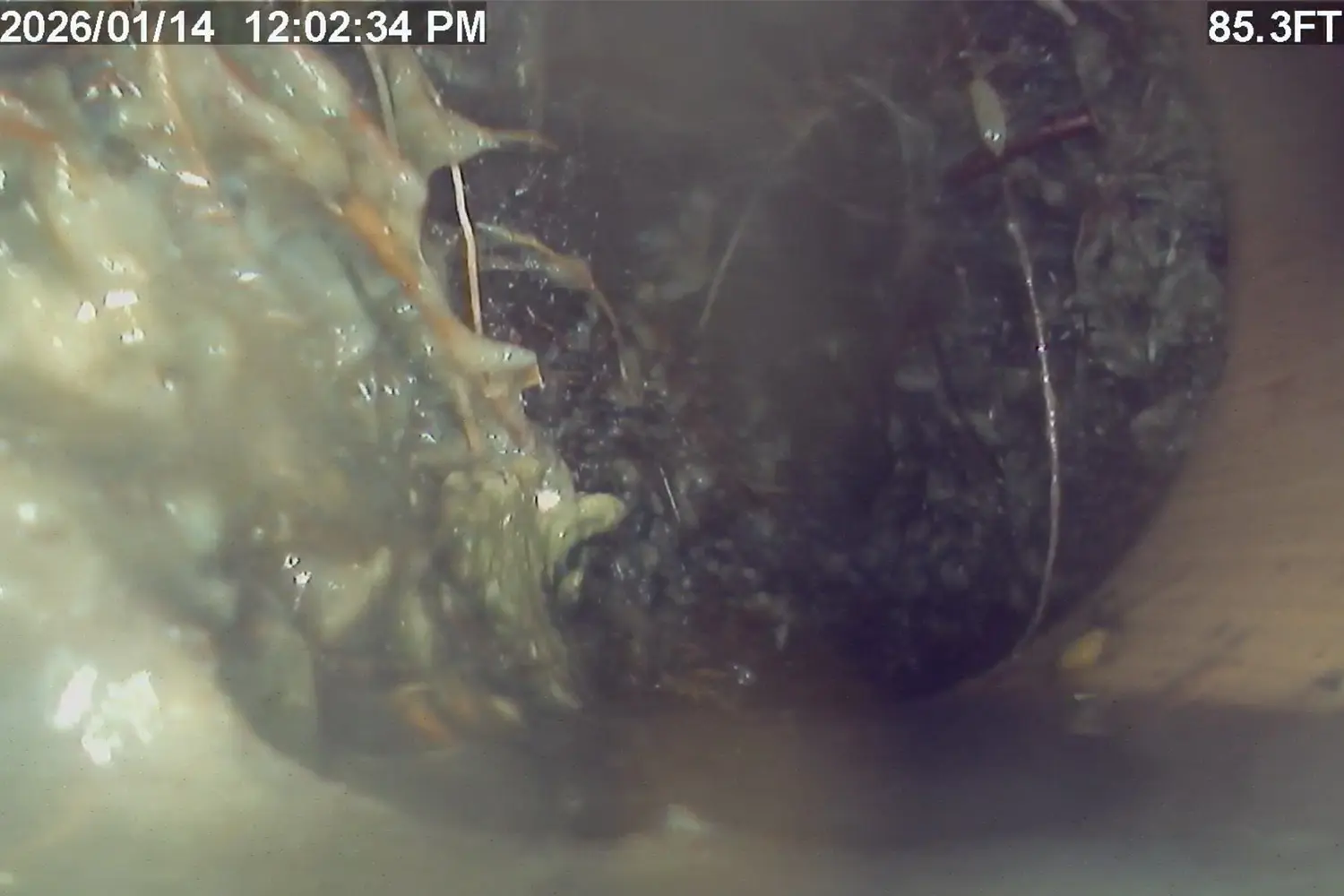
Sewer line camera inspection in SW Calgary showing roots in plumbing

Roots in Sewer Line: What Calgary Homeowners Need to Know

If you live in Calgary, especially in an older neighbourhood with mature trees, sewer line problems caused by roots are more common than most homeowners realize. It often starts quietly. A slow drain here. A backup there. Something that feels inconvenient but manageable.

Then it keeps happening.

If you scroll a bit, you’ll see a short video taken from inside a sewer pipe showing what root intrusion actually looks like. It’s often more eye-opening than any description because you can see how quickly roots turn a small entry point into a repeating blockage.

Many homeowners reach a point where they ask what went wrong and what actually works. That question often comes after trying a DIY fix or getting advice online that does not take older pipes or limited access into account. This guide is meant to break things down and explain what root intrusion really means, why it keeps coming back, and how to protect your home without making the problem worse.

Why Tree Roots Are Drawn to Sewer Lines

Tree roots do not damage sewer lines out of aggression or chance. They are simply doing what roots are designed to do. They seek moisture, warmth, and nutrients.

Your sewer line offers all three.

In older Calgary homes, sewer pipes are often made from materials that were never meant to last forever. Small cracks, aging joints, and minor separations develop over time. To a tree root, those tiny openings are an invitation.

Once a root finds its way inside, it does not stop. It continues to grow, slowly expanding within the pipe. Over time, it catches waste and paper. That buildup restricts flow and creates recurring clogs that seem to come back no matter how many times the drain is cleared.

This is why homes with large trees nearby or yards planted decades ago tend to experience this problem more often.

How Root Intrusion Turns Into Real Damage

Root problems rarely show up all at once. At first, water may drain more slowly than usual. Toilets may need an extra flush. Gurgling sounds might come from a basement drain.

As roots grow, the problem shifts from inconvenience to risk.

The roots continue to expand, pushing against the pipe walls. In fragile or older sewer lines, this pressure can worsen cracks and weaken the structure. Eventually, water has nowhere to go. That is when backups occur, often at the lowest drain in the home.

At that point, the issue is no longer just a clog. It becomes a threat to flooring, finished basements, insulation, and indoor air quality. The cost and stress increase quickly once sewage enters the living space.

Why Many DIY Approaches Create Bigger Problems

When homeowners search for solutions, they often find advice that sounds simple. Chemical drain products. Root killers.

The problem is that most of these approaches treat the symptom rather than the condition of the pipe itself.

Chemical products may kill some roots, but they do not repair the damage already done. In older pipes, they can also accelerate deterioration or weaken aging joints over time. Root killer treatments can reduce growth temporarily, but they do not remove the root mass already inside the line, and they do not seal the entry point where roots are getting in.

This is where homeowners with limited cleanout access get into trouble. Working through a small elbow rather than a proper access point limits visibility and control. That increases the chance of pushing the blockage further, missing early pipe damage, or repeating the problem again a few weeks later.

In many cases, people end up calling a professional after a DIY attempt has made the situation worse, or after the issue keeps returning without a clear reason why.

Warning Signs Roots Are Affecting Your Sewer Line

Root intrusion usually gives warnings before a major failure. The challenge is recognizing them early.

The video below is a good example of what a camera inspection reveals, not guesses, not assumptions, just the real condition of the line.


Recurring clogs that affect multiple drains are one of the most common signs. If clearing one fixture does not solve the issue, the problem may be in the main line.

Gurgling sounds, especially after flushing or draining water, often indicate restricted flow. Unpleasant odours can appear when waste sits longer than it should inside the pipe.

Backups that happen during heavy water use or after rain are another signal. This suggests the system is already under strain.

Homes without a proper cleanout deserve extra caution. Limited access makes diagnosis and repair more complex.

Common Calgary Trees More Likely to Cause the Most Pipe Damage

Again, the pipe’s condition matters most, but these are often flagged as higher risk for chasing moisture and finding weak joints or cracks:

  • Poplar (including cottonwood and aspen relatives)
  • Willow
  • Elm
  • Ash
  • Birch

When Professional Assessment Becomes the Safer Choice

The most important step in dealing with roots is understanding what is happening inside the pipe before choosing a solution. This is where professional inspection matters.

A sewer line camera inspection like the one above allows the plumber to see exactly where roots have entered, how extensive the growth is, and what condition the pipe is in. This information changes everything.

In some homes, careful removal and monitoring may be enough. In others, damaged sections need repair to prevent repeat failures. The right approach depends on what the pipe can safely handle.

For older Calgary homes, especially those with brittle materials, caution protects both the plumbing system and the structure of the house. A careful assessment prevents small issues from turning into insurance claims or emergency repairs.

How Harper’s Plumbing Protects Calgary Homes From Root Damage

At Harper’s Plumbing, root problems are handled with care, not force. As a family-owned Calgary company trusted since 2013, the focus is on protecting your home, not just clearing a blockage and moving on.

Every job starts with understanding what’s happening inside the line. With tree roots, clearing the blockage is only part of the picture, because roots tend to grow back as long as there’s an opening letting them in. The goal is to clear the line safely and help reduce repeat clogs by addressing what’s causing the problem in the first place.

Licensed and insured technicians explain what we’re seeing and walk you through the options in plain language, so you can make a confident decision. We focus on the right next step for your home and the condition of your line, whether the problem is just starting or you’re already dealing with a backup.

Roots in a sewer line are rarely a one-time issue. If roots can still access the pipe, the blockage often returns. Addressing the cause, not just the clog, helps protect your basement, finishes, and peace of mind.

The goal is not just to clear the pipe. It is to understand how the roots got in, address what is causing the repeat blockage, and share a simple maintenance plan that helps prevent a bigger issue like a backup. It is to keep your home safe, dry, and functioning the way it should.

It is also worth knowing that, in some older Calgary neighbourhoods, the City of Calgary has programs that deal with root intrusion and aging sanitary service lines on the city side. If you are not sure where the blockage is coming from, you can contact 311 to request help determining whether the issue is on municipal property or your private line. The City also runs work like its Sanitary Lateral Lining Program to rehabilitate sanitary service pipes without digging in some areas.

If you have questions about root intrusion, sewer line inspections, or next steps for your home, contact Harper’s Plumbing. We’re happy to talk it through.

Scroll to Top
Call Now Button