A slow drain has a way of showing up at the worst possible time. Maybe it is the kitchen sink after dinner, the shower before work, or a basement drain that suddenly starts backing up.
Most Calgary homeowners try the usual fixes first. A plunger. A store-bought drain cleaner. Maybe a quick DIY attempt. Sometimes that is enough. But when the problem keeps coming back, or the water will not move at all, that’s usually the time to call us.
For most drain cleaning calls we get, the solution can come down to two common methods: drain snaking or hydro jetting. Both can clear blockages, but they do not work the same way. One is better for simple, localized clogs. The other is often better when there is a heavy buildup deeper in the line.
The right choice depends on what is actually happening inside the pipe. That is why a proper diagnosis matters. When you are dealing with a clogged drain in Calgary, matching the method to the problem can save you time, money, and a lot of frustration.
How a Drain Snake Works and When It Makes Sense
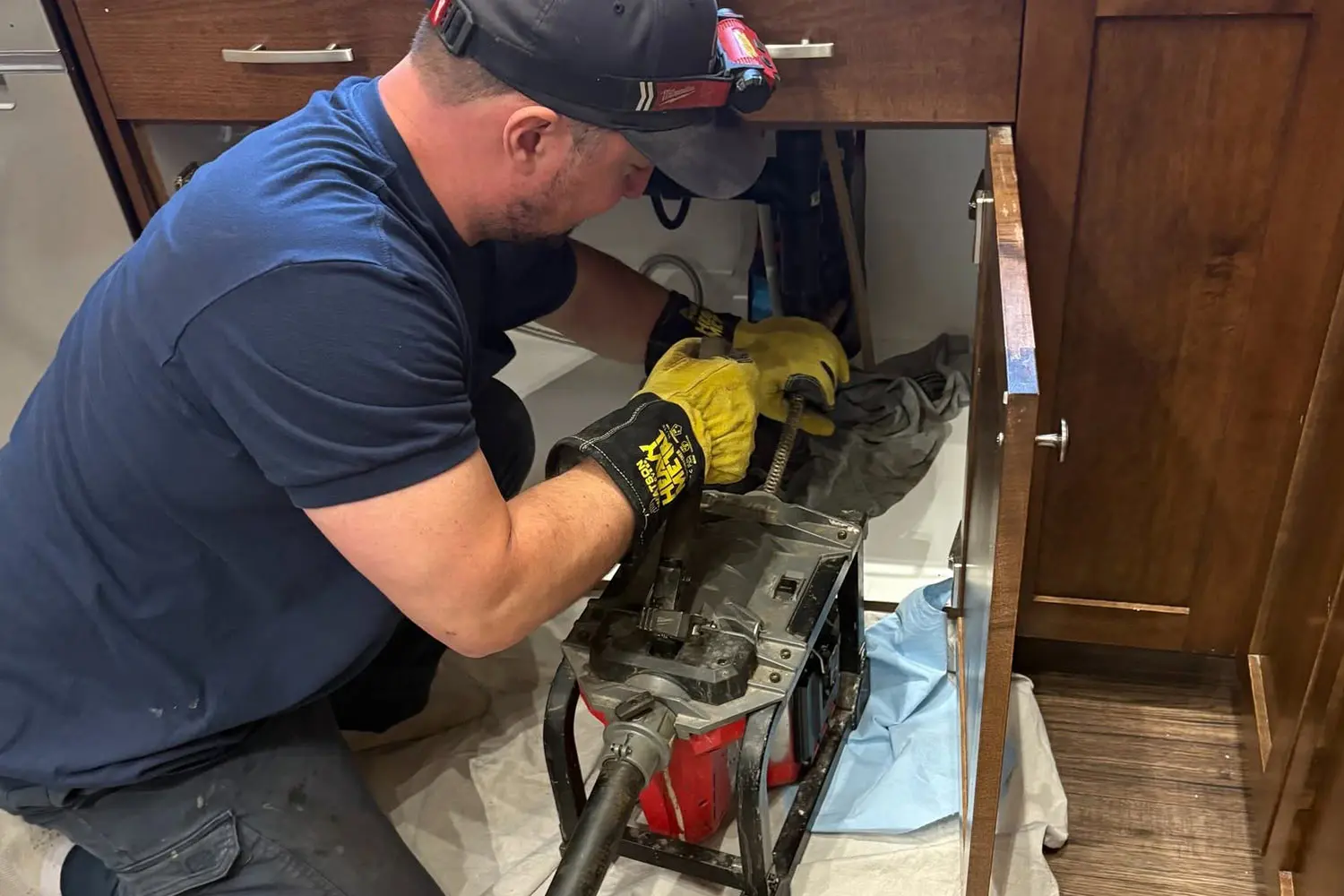
A drain snake, sometimes called an auger, is one of the most common tools plumbers use for everyday clogs. It is a long, flexible cable that works its way through the drain until it reaches the blockage. Once it makes contact, the head of the snake can break the clog apart or hook onto it to pull it out.
This method works well for smaller, localized problems. Hair in bathroom drains, soap buildup, food debris in kitchen lines, and toilet paper blockages can often be cleared with a snake.
For many homeowners, snaking is the right first step. It is direct and practical, and it usually gets the water moving again without requiring a more involved service.
The limitation is that a drain snake usually clears a path through the clog. It may not remove everything stuck to the pipe walls. Grease, mineral film, soap scum, and other buildup can stay behind. If that buildup is the real reason the drain keeps slowing down, the same problem may return a few weeks or months later.
How Hydro Jetting Works and When It Steps In
Hydro jetting uses a high-pressure stream of water to clean the inside of the drain line. A specialized hose and nozzle are guided through the pipe, and water is sprayed forward and backward to break up the buildup and flush debris through the line.
Instead of just clearing the clog, hydro jetting cleans more of the pipe itself. It can be a better option for heavy grease buildup, thick soap scum, mineral scale, and some root intrusions.
This is often recommended for main sewer lines, recurring backups, and drains that have not been properly cleared in a long time.
That said, hydro jetting is not something to use blindly. The pressure is strong, so the pipe needs to be in good enough condition to handle it. In many cases, especially with older sewer lines, a camera inspection should come first. That allows the plumber to check for cracks, collapsed sections, severe corrosion, or offset joints before sending high-pressure water through the line.
A Simple Way to Compare the Two
| Comparison Point | Drain Snake | Hydro Jetting |
| Best for | Localized clogs in sinks, showers, tubs, and toilets | Recurring backups, main line restrictions, grease buildup, scale, and roots |
| How it works | Breaks through or pulls out the blockage | Uses high-pressure water to clean the pipe interior |
| Pipe cleaning depth | Clears the main path through the clog | Cleans more of the pipe walls and buildup |
| Upfront cost | Usually lower | Usually higher |
| Long-term value | Good for simple, one-time clogs | Better for recurring issues and heavy buildup |
| Pipe condition needed | Works for most pipe types and ages | Requires structurally sound pipes |
| Inspection recommended | Helpful, but not always required | Strongly recommended before service |
Which Method Fits Your Drain Backup?
The right method depends on where the blockage is, what caused it, and whether it has happened before.
If one sink, shower, or tub is draining slowly, the problem is usually close to that fixture. In that case, a drain snake is often enough to clear the blockage and restore normal flow.
If several fixtures are backing up at the same time, the issue may be deeper in the main line. You might notice gurgling toilets, water backing up in a basement drain, or multiple drains slowing down at once. When that happens, hydro jetting may be the better option, especially if buildup has been collecting inside the line for years.
If this is the first clog you have had in a long time, snaking may solve the problem. If the same drain backs up every few months, there may be something more going on inside the pipe. Grease, mineral scale, root growth, or a small pipe misalignment can all cause repeat problems.
Older homes with clay or cast-iron sewer lines need extra care. Before choosing a clearing method, it is worth checking the condition of the pipe so the plumber can choose the safest approach.
Why Calgary Homes Often Need More Than a Quick Fix
Drain problems in Calgary are not always caused by one simple clog. Local homes deal with a mix of hard water, cold winters, mature trees, and older underground plumbing.
Hard water can leave mineral deposits inside pipes over time. As those deposits build up, the opening inside the pipe gets narrower. That makes it easier for soap, grease, hair, food debris, and other material to catch.
In older Calgary neighbourhoods with mature trees, roots can also become a problem. Roots naturally seek moisture, and older sewer lines may have small cracks, loose joints, or weakened sections where roots can enter. Clearing the roots may restore flow, but it does not always fix the reason they entered the pipe in the first place.
Cold winters can also worsen kitchen drain problems. Grease and fats can harden more quickly in the line, especially when they are rinsed down the sink. Once grease sticks to the pipe walls, it can more quickly collect food debris and soap residue.
Some areas also deal with shifting soil, which can contribute to small pipe offsets underground. Even a slight misalignment can catch debris and lead to repeat backups.
That is why a slow drain is not always just a slow drain. Sometimes it is a simple clog. Other times, it is a sign that the pipe needs a closer look.
When a Camera Inspection Should Come First
Guessing what is happening inside a wall or underground sewer line can lead to the wrong fix. A camera inspection gives the plumber a clear view of the pipe’s interior before choosing a method.
This is especially helpful if you have recurring backups, multiple drains acting up, an older home, or signs that the issue may be in the main sewer line.
A camera can show cracks, offset joints, collapsed sections, corrosion, heavy buildup, or root growth. Those details matter. A pipe that is in good condition may be safe for hydro jetting. A damaged pipe may need a different approach.
The goal is not just to clear the drain for today. It is to understand what caused the problem, so you are not dealing with the same backup again next month.
Why Homeowners Call Harper’s Plumbing for Drain Cleaning
When you are dealing with a backed-up drain, you do not want to guess. You want someone to look at the issue properly, explain what is going on, and clear the line in the safest, most effective way.
At Harper’s Plumbing, camera inspections are part of our drain snake services. We do this because restoring flow is only part of the job. By looking inside the line, we can better understand what caused the blockage, confirm the drain has been properly cleaned, and check for issues like buildup, roots, offsets, or damage.
If a drain snake is enough to clear the problem, we will tell you. If hydro jetting or another next step makes more sense, we will explain why so you know what is happening inside your drain, not just that the water is moving again.
Not sure whether your drain needs snaking, hydro jetting, or a camera inspection? Contact Harper’s Plumbing today. We will walk you through the next steps clearly, so you can get the right fix.