A slow drain is easy to put off because, technically, it still works. The kitchen sink takes a little longer to empty, or you notice water pooling around your feet at the end of a shower, but eventually it goes down, and you carry on with your day.
Sometimes it’s something simple, like hair or buildup near the drain. What we pay more attention to is a drain that keeps getting slower, comes back after you clear it, or starts acting up along with other fixtures in the house.
A slow drain does not automatically mean you have a sewer problem. But drains usually don’t slow down for no reason, and figuring out what is causing the restriction early can save you from dealing with the same problem over and over again.
Why Does a Drain Start Slowing Down?
There are several reasons a drain can slow down, and the location of the problem usually gives us the first clue.
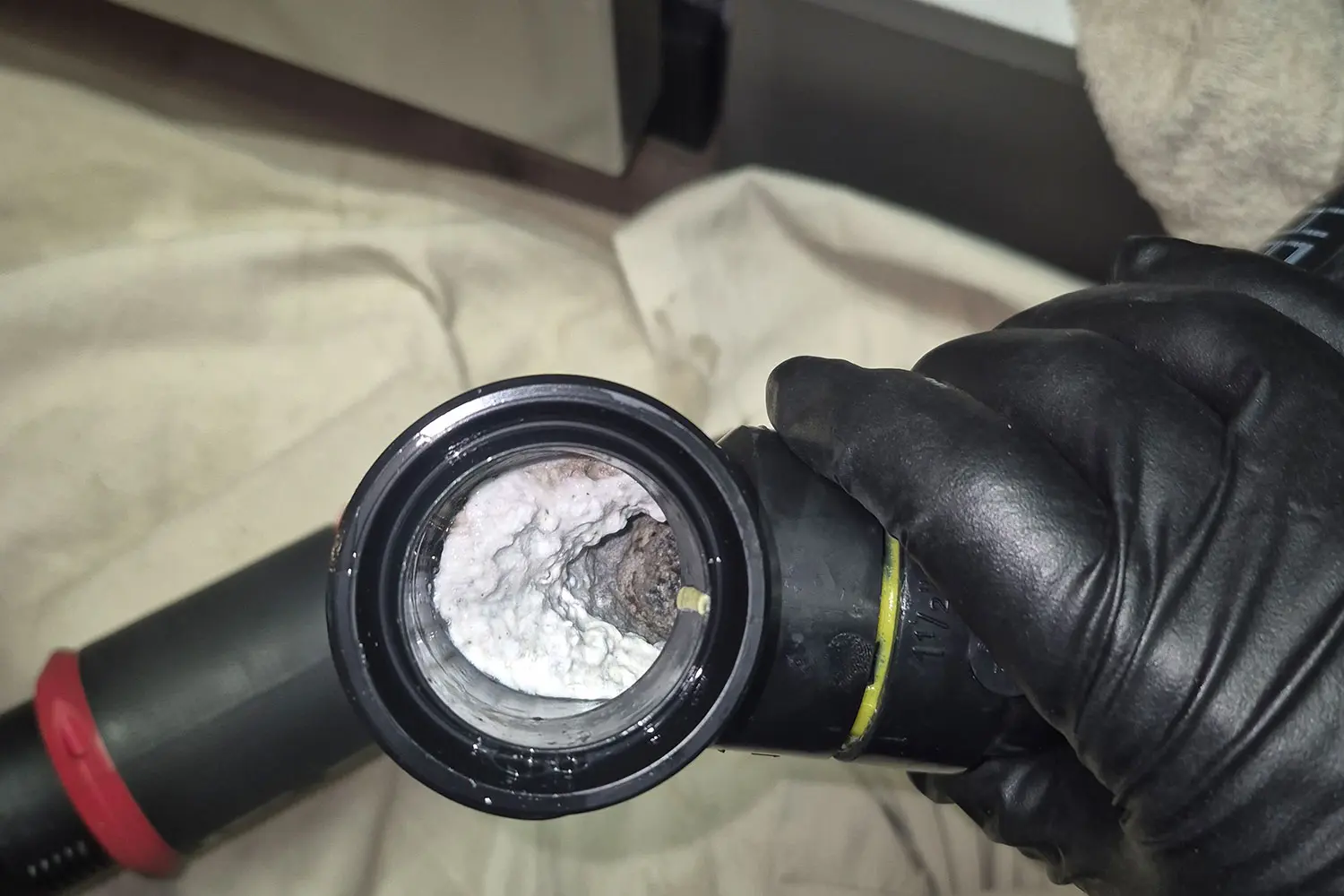
Bathroom sinks, tubs, and showers commonly collect hair, soap, toothpaste, and other residue. In the kitchen, grease and food buildup are more common. Material slowly sticks to the inside of the pipe, leaving less room for water to move through.
If the same drain keeps slowing down after it has been cleared, there may be more happening farther along the line. Mineral buildup, roots, a shifted pipe joint, or a low spot in the sewer line can all contribute to repeat problems.
That is why the pattern matters as much as the drain itself. One slow bathroom sink that started yesterday is a very different situation from several drains that have been getting worse for months.
The First Cost Is Usually Your Time
Most slow drains do not begin with a dramatic plumbing problem. They begin by being annoying.
You clear some hair from the stopper, use the plunger, and the water starts moving again. A few weeks later, it slows down. You do the same thing again, and for a while it seems fine.
We see this quite a bit. By the time someone calls us, they may have been dealing with the same drain on and off for months.
If the blockage is close to the fixture, a simple cleaning may solve it. But when the problem keeps returning, repeatedly getting the water moving does not necessarily tell you why it slowed down in the first place.
At that point, the real cost isn’t just the time spent dealing with the same problem, or the frustration of never quite knowing when the drain will stop working again. It’s also the repair itself. A straightforward drain cleaning is one thing, but if the problem has been building for a while, the job can take longer and cost more than it would have if we’d looked at it sooner.
When a Slow Drain Turns Into a Full Clog
A partially blocked pipe still leaves some room for water to pass. As more hair, soap, grease, or debris collects, that opening can keep getting smaller until very little water can get through.
That is when a slow drain can turn into a sink that will not empty, a shower that fills while you are using it, or a toilet that doesn’t flush the way it normally does.
This does not mean every slow drain is heading toward a major backup. Plenty of small clogs stay close to one fixture and are fairly straightforward to deal with. This does not mean every slow drain is heading toward a major backup. Plenty of small clogs stay close to one fixture and are fairly straightforward to deal with. What matters is dealing with it before it turns into a backup or a bigger problem.
If the drain is noticeably slower each week, or you are clearing it again and again, we would take that as a sign it is worth looking at more closely.
Is It One Slow Drain or Several?
This is one of the first questions we would ask.
If only one sink, tub, or shower is slow, the restriction is often somewhere in the drain serving that fixture. Hair in a shower drain or buildup in a bathroom sink are good examples.
If only one sink, tub, or shower is slow, the restriction is often somewhere in the drain serving that fixture. Hair in a shower drain or buildup in a bathroom sink are good examples.
Several fixtures draining slowly gets us thinking this may be a bigger issue in the pipes connecting those fixtures, such as the main stack. If the toilet gurgles when the washing machine drains, water comes up in a basement floor drain, or both the tub and toilet start acting differently, it points in that direction.
Those symptoms still do not tell us exactly what is wrong, but they give us a better idea of where to start looking.
If you are trying to decide whether a clogged drain in your Calgary home is just one troublesome fixture or something bigger, pay attention to what the rest of the house is doing. The drains often give you more information when you look at them together.
The Bigger Problem May Have Already Been There
One thing we always want homeowners to understand: skip the off-the-shelf drain chemicals.
They rarely solve the actual problem, and they can make things harder for us if we do need to come out. If you’ve already tried one and it didn’t work, that’s fine, it happens, just let us know when we get there. It changes how we approach clearing the drain, and it’s better for us to know upfront than to find out partway through the job.
Ignoring a slow drain isn’t harmless, either. As buildup collects and the opening in the pipe gets smaller, more pressure builds up trying to force water through. Over time, that can put stress on the pipe itself, not just slow things down.
This comes up especially in older Calgary neighbourhoods where mature trees and older underground plumbing are both common. We talked about this in our article on roots in sewer lines, because roots can keep coming back as long as there is an opening that lets them into the pipe.
The concern with waiting isn’t that a slow drain instantly damages a healthy sewer line. It’s that the buildup causing the slowdown can, over time, add pressure and wear the pipe wasn’t built to handle, on top of missing warning signs of a problem that would have been easier to deal with earlier.
What Can You Check Yourself?
You don’t need to call a plumber every time a sink takes a few extra seconds to empty. There are a few simple things you can look at first.
Check whether hair or visible debris is caught around the stopper or drain opening. Pay attention to whether the problem is limited to that fixture or whether another drain is slow too. You can also listen for gurgling and watch for water showing up somewhere unexpected when another fixture is used.
It also helps to think about the history of the problem. If this is the first time the drain has been slow, that is useful to know. If you cleared the same drain last month and it is already slowing down again, that tells us something different.
We don’t recommend continuing to throw different fixes at a recurring drain without knowing what is causing it. Getting the water moving for the day and fixing the reason it keeps slowing down are not always the same thing.
When We’d Want to Take a Closer Look
A slow drain is worth resolving when you start noticing a pattern.
That includes drains that repeatedly slow down after being cleared, several fixtures acting up at once, toilets that gurgle when other water is running, sewer smells that keep returning, or water backing up into a tub, shower, or floor drain.
If you have an older home and the same main-line problem has happened before, we’ll want to know that, too. The history of the plumbing can be just as helpful as what the drain is doing today.
The right next step depends on what we find. Where we can get a camera into the pipe, that’s part of how we approach drain cleaning, not an extra step. It gives the tech a clear view of what they’re clearing and gives you a better picture of what’s actually going on in the line.
What Would Harper’s Look For?
We usually start by talking through what you have been noticing. Which drain is slow? How long has it been happening? Has it been cleared before? Are any other fixtures doing something unusual?
From there, the goal is to work out whether the restriction seems local or whether there is reason to look farther down the plumbing system.
Depending on the situation, that may mean clearing the drain with a snake or using hydro jetting for heavier buildup. Where we can get a camera into the pipe first, we will, since it helps the tech see exactly what they’re clearing and gives you a clearer picture of what’s happening in the line. We covered the differences between those cleaning methods in our drain snake vs. hydro jetting guide.
The important part is matching the next step to what is actually happening. If the same blockage keeps returning because something farther down the line is causing it, we would rather explain that than keep clearing the same drain over and over.
Is That Slow Drain Starting to Become a Pattern?
A slow drain does not always mean something serious, but one that keeps coming back is worth paying attention to. If you have already cleared it and the problem has returned, or other drains around the house are starting to act differently too, it may be time to take a closer look.
Harper’s Plumbing can check what is happening, explain what we find, and help you work out the right next step without making the situation more complicated than it needs to be.
You’re welcome to call our office or book online. Tell us what the drain has been doing and how long it has been going on, and we can help you figure out what makes sense from there.