Most of us don’t think much about the plumbing when everything seems to be working. The taps turn on, the toilets flush, the hot water shows up, and life carries on.
Then something small happens. Maybe the water pressure seems different, or you notice a bit of staining under your bathroom sink and realize you’re not really sure when anyone last looked at the rest of the system.
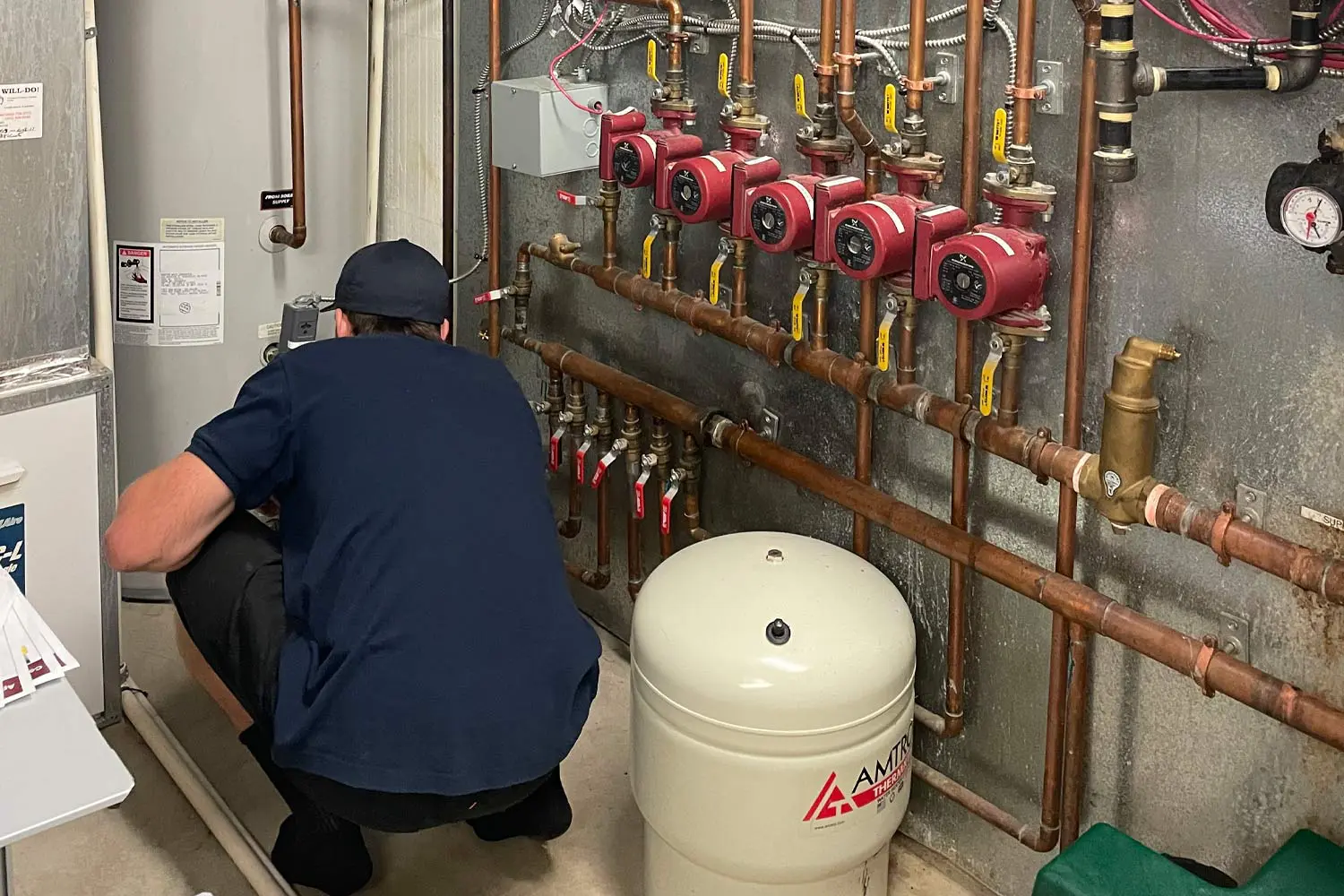
A plumbing inspection is basically a checkup of your home’s plumbing. The plumber looks for signs of leaks, wear, drainage issues, aging components, and anything that may need attention now or down the road. It’s a practical way to get a clearer picture of how the system is doing.
What Happens During a Plumbing Inspection?
What we look at depends a little on the home and why you asked us to come out, but there are a few areas that usually make sense to check.
That can include visible water lines, shut-off valves, toilets, sinks, tubs, showers, drains, and the water heater. We may also look at water pressure, sump pump operation, or other plumbing equipment that’s part of the home.
One thing our plumbers watch for is anything that looks or behaves differently than it should. That might be corrosion around a connection, moisture where it should be dry, a toilet that keeps running, a drain that’s slower than the others, or a shut-off valve that hasn’t moved in years.
We also like homeowners to know where their main water shut-off is and whether it works. In an emergency, that’s one of the most useful things you can know about your plumbing.
If something during the inspection points to a larger issue, we can explain what the next step would be. For example, drainage concerns may mean running a camera farther down the line, while a worn valve or leaking connection may be something you can simply address at the fixture.
How We See What’s Hidden
A lot of a home’s plumbing sits behind walls, under floors, or underground. What you can see from the outside only tells part of the story, so we bring equipment that lets us look further.
For leaks, we use thermal cameras to detect temperature differences behind walls, floors, and ceilings that can indicate moisture. A borescope, which is a small camera on a flexible cable, lets us look inside a wall or other tight space through a small opening.
For drains, we run a camera through the line whenever we can get access. It shows us the inside of the pipe, including roots, buildup, cracks, or shifted joints, and where they are along the line.
Not every plumbing company invests in this kind of equipment. We do because it gives you a more complete and accurate picture of what’s going on, and our recommendations come from what we’ve actually seen.
When Is a Plumbing Inspection Worth Doing?
A plumbing inspection can be useful before something breaks, especially when the home is older, or a few small problems have started showing up.
You Live in an Older Home
In older SW Calgary and Foothills homes, we often see plumbing that’s been updated in stages over the years. You might have older copper, Poly B, cast iron, and newer sections from a renovation or repair all in the same house.
With older plumbing, the useful part is knowing what’s there, what’s still in good shape, and what may be worth watching. Sometimes everything is doing exactly what it should. Other times, one older connection or valve may be worth dealing with while the rest of the system is still in good condition.
You’ve Started Noticing Small Changes
Sometimes an inspection is needed because a few small things have started adding up.
That might be a toilet that occasionally keeps running, a slow drain, a shut-off valve that’s hard to turn, a small drip under a sink, or water pressure that feels different than it used to.
Each of those can have a simple explanation. Looking at the plumbing as a whole can put those small changes in context and show whether they’re related or separate maintenance items.
Your Water Use Has Changed
If your water bill or usage has gone up and nothing in the household has changed, it’s worth checking for a leak.
One simple thing you can do yourself is turn off all taps and water-using appliances, then look at the water meter. If it’s still showing water use, that can mean water is moving somewhere in the house.
That gives your plumber a useful starting point and may help narrow down where to look.
You’re Buying a Home
Before a purchase goes through, buyers often ask us to inspect the main sewer line. It’s one of the more costly parts of a home’s plumbing to repair, and you can’t judge it from inside the house. We run a camera through the line and show you what we find.
If the line is in good shape, that’s one less unknown. If it isn’t, you find out before you’ve committed. Some buyers use what we find when they negotiate. Others realize the home will cost more to repair and run than they’d expected, and decide it isn’t the right one after all.
You’re Planning a Renovation
If you’re already opening walls or floors for a bathroom, kitchen, or basement renovation, it’s a good time to check the plumbing that’ll soon be covered again. We see this often in older Calgary homes that have already been renovated once or twice.
Open walls and floors give your plumber a good chance to spot worn valves, older connections, previous water damage, or anything else worth addressing while access is easy.
It also gives you a better idea of what’s already there before you install new fixtures and finishes.
You Don’t Know the History of the House
Some homeowners have lived in the same house for years but have no idea what plumbing work was done before they moved in. Others have recently moved in and want a better sense of what they’re working with.
A plumbing inspection can help fill in some of those blanks. It gives you a clearer idea of what’s been updated, what appears to be original, and what may need attention over time.
What Can You Check Yourself?
There are a few simple things you can watch for between professional visits.
Look under sinks for moisture or staining, check around toilets for signs of water, and watch for shut-off valves that are hard to turn. Listen for water running when nobody’s using anything, and watch for drains that slow down or pressure that changes.
If you have a sump pump, it’s worth testing it from time to time. Your part is simply noticing when something has changed. We can help figure out what’s causing it and what makes sense to do next.
What Happens If We Find Something?
Sometimes we go through a home, and there really isn’t much to report, which is a good outcome. In other homes, we may find one or two things that are worth fixing or keeping an eye on.
If we do find something, we’ll explain what it is, why it matters, and how soon it needs attention. A small leak or worn shut-off may be worth dealing with sooner, while another older component may still have plenty of life left.
The goal is to give you a clearer picture of your home’s plumbing and explain what, if anything, is worth addressing.
How Is a Home Plumbing Check Different From a City Inspection?
A home plumbing inspection from Harper’s Plumbing is a service visit focused on the condition of your home’s plumbing.
A City plumbing inspection is connected to permitted plumbing work, such as when a system is added to or altered. If you’re planning a renovation or other permit-required work, your plumber or contractor can explain what needs to happen and when the City inspection fits into the project.
They’re two different kinds of inspections, each with a different purpose.
Thinking About a Plumbing Inspection?
If you’ve lived in the home for a while and aren’t sure when the plumbing was last checked, a few small things have started making you wonder, or you’re looking to buy, we can walk through the system with you.
We’ll explain what we’re seeing as we go and talk through anything that’s worth fixing or watching over time.
You’re welcome to call the office or book online. Tell us a little about the home and what has you thinking about an inspection, and we can help figure out what makes sense.